
Business and Computing
Our inspiring curriculum is designed to equip students with the essential skills they need to thrive in the modern world. Blending theoretical knowledge with hands-on, practical application, our courses prepare students to excel in both business and technology.
In Business, students learn how real organisations operate, compete, and grow from finance and marketing to enterprise and management developing the commercial awareness and confidence to turn ideas into action.
Whether a student’s passion lies in entrepreneurship, management, software development, or IT, our dynamic range of subjects is tailored to ignite curiosity and drive. We give students the space to explore, innovate, and lead, building the confidence and skills they need to shape their own future in the ever-evolving worlds of business and computing.


Computing – Years 7, 8 and 9
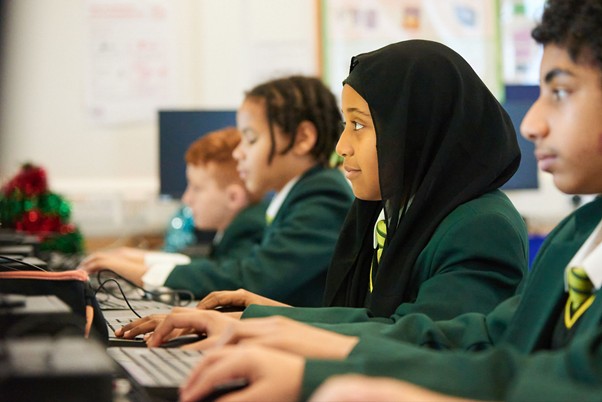
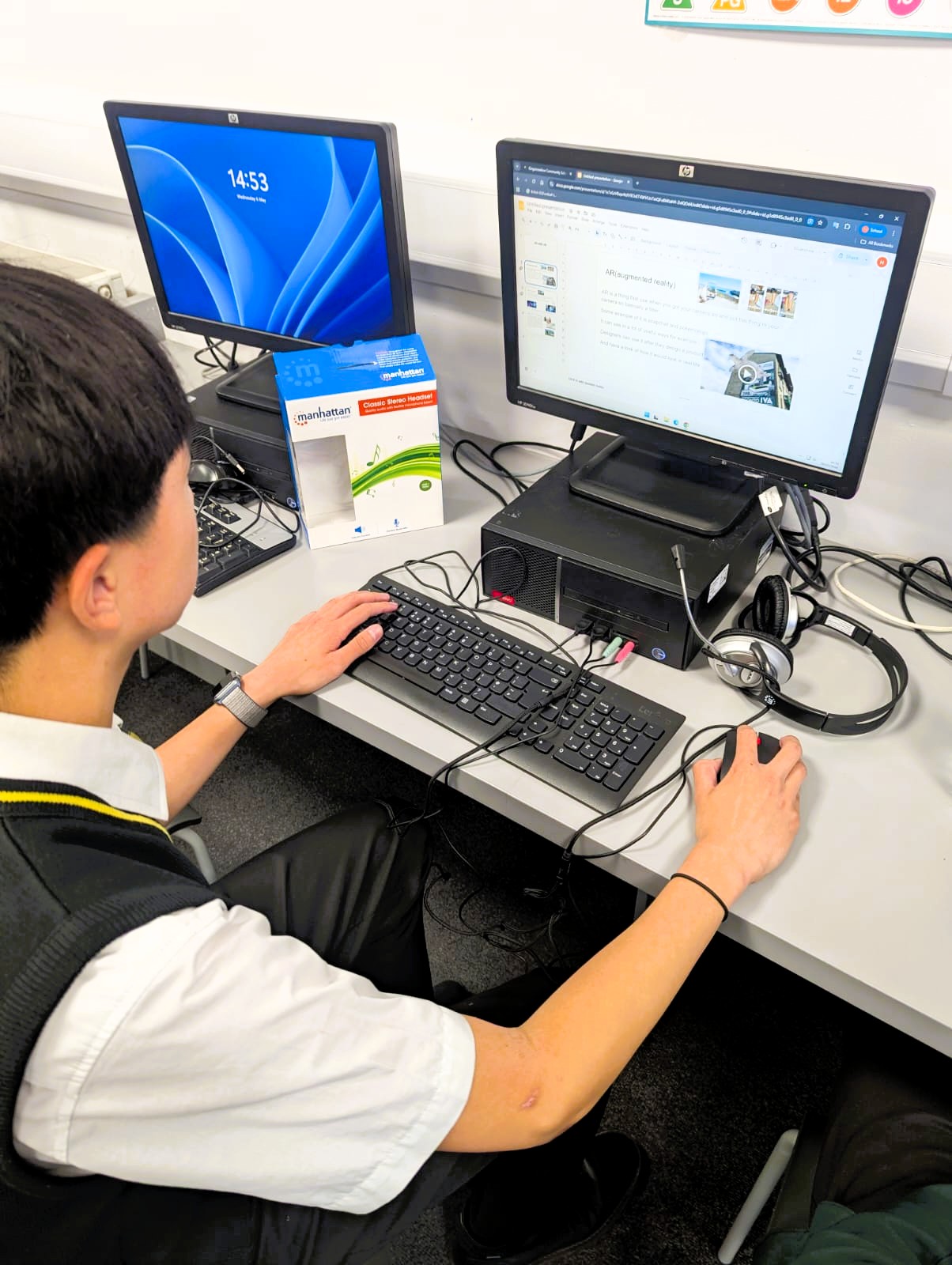
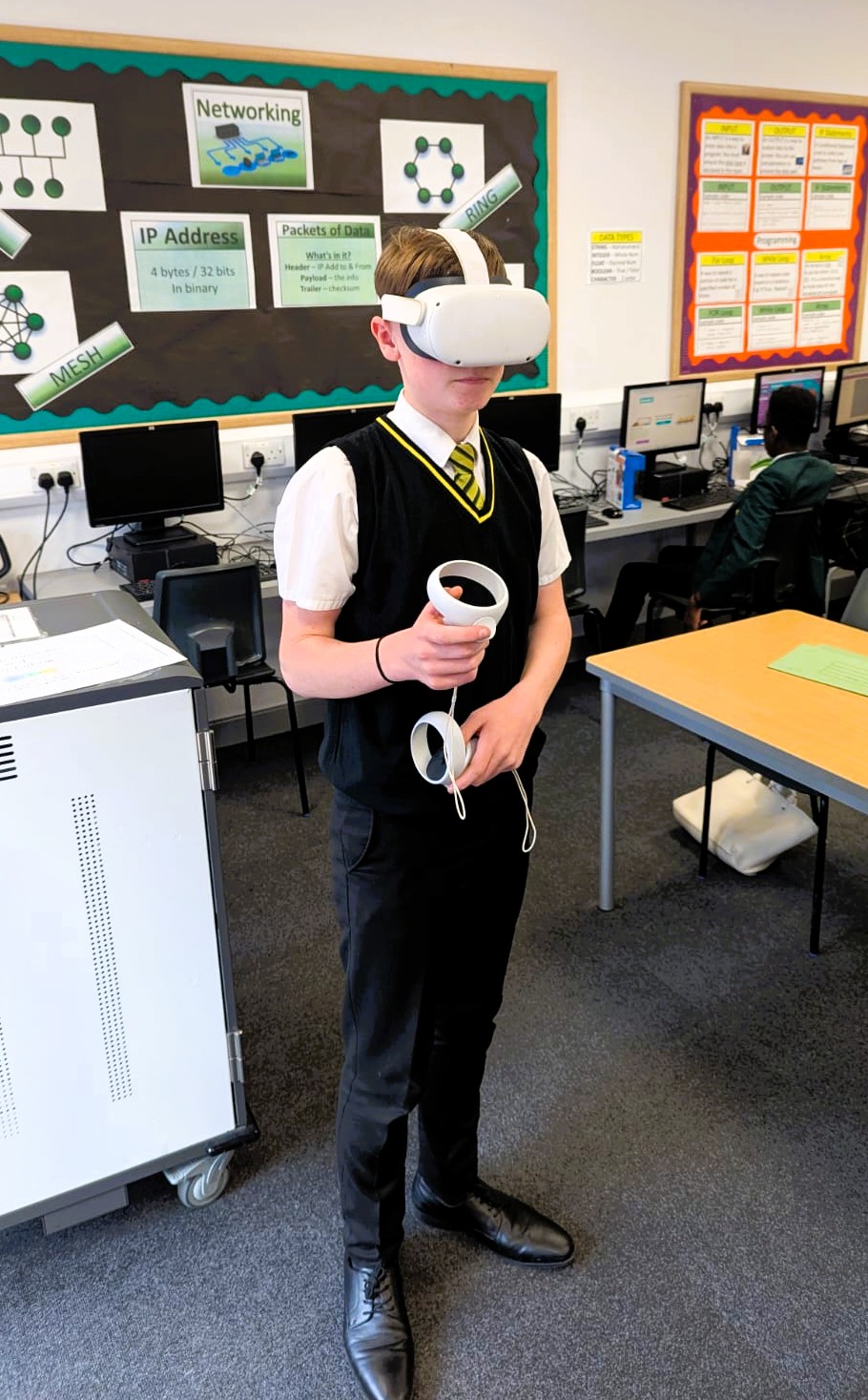
Our Key Stage 3 Computing curriculum offers students an exciting gateway into the digital world. With one hour of dedicated teaching each week, students explore a rich and varied range of topics, from cracking codes in Cryptography to understanding how the internet connects us all through Networks and Cyber Security.
Students get hands-on with Python programming, building the confidence to write, test, and debug their own code, while mastering Algorithms and Computational Thinking to develop sharp, logical problem-solving skills. Alongside this, they unleash their creativity through animation, graphic design, and website creation, discovering that computing is as much about imagination as it is about logic.
Students are also encouraged to think beyond the screen, exploring how technology shapes societies and cultures around the world. Through engaging, hands-on activities, they build the skills, confidence, and curiosity to tackle real-world challenges, laying strong foundations for further study in Computing and Business, and equipping them with skills that matter far beyond the classroom.
Cambridge Nationals in Enterprise and Marketing – Years 10 and 11
This qualification gives students a practical, hands-on introduction to how businesses start up, grow, and succeed in a competitive market. It combines real-world enterprise skills with creative and analytical thinking, preparing learners for further study or careers in business, marketing, and entrepreneurship.
Students learn how businesses are structured and financed, carry out market research to understand customer needs, and use the marketing mix to shape their ideas. They apply financial calculations to test whether a business proposal would be profitable, then develop a brand identity and promotional campaign, culminating in a professional pitch to an audience.
The course is made up of three mandatory units: one examined unit on enterprise and marketing concepts, and two coursework units covering designing a business proposal and marketing/pitching that proposal.
It’s ideal for students who enjoy real-life business scenarios and presenting ideas with confidence, and it builds valuable skills in research, communication, and problem-solving, providing a strong foundation for further study in Business, Enterprise, Finance, or Marketing at GCSE, A Level, or vocational level.
GCSE (OCR) Computer Science
This qualification gives students a strong grounding in computational thinking, programming, and how computer systems work, preparing them for further study or careers in computing and technology.
Students learn how computers process, store, and transmit data, covering topics such as CPU architecture, memory and storage, networks, cyber security, and the ethical and legal impact of technology. They also develop practical programming skills, learning algorithms, data structures, Boolean logic, and how to write, test, and debug robust code.
The course is assessed through two exam papers: Computer Systems, and Computational Thinking, Algorithms and Programming.
It’s ideal for students who enjoy problem-solving, logical thinking, and building things with code, and it provides an excellent foundation for further study in Computer Science, or careers in software development, cyber security, and other technology fields.
Cambridge Nationals iMedia (OCR) – Year 11
This qualification gives students a practical, creative introduction to the media industry, developing the skills needed to plan, create, and review a range of digital media products. It’s ideal for students who enjoy combining creativity with technology, and it prepares learners for further study or careers in digital media, design, and the creative industries.
Students learn how the media industry works, exploring digital media products and the visual techniques used to engage audiences. They develop practical graphic design skills, creating visual identities and digital graphics for a client brief, and go on to specialise in an area of their choice — from characters and comics to animation, interactive media, visual imaging, or digital games.
The course is made up of two mandatory units — one examined unit on the media industry, and one coursework unit on visual identity and digital graphics plus one optional coursework unit chosen from a range of creative specialisms.
It builds valuable skills in design, planning, and digital production, providing a strong foundation for further study in Creative Media, Graphic Design, or IT at GCSE, A Level, or vocational level.
